Showing posts with label college admissions. Show all posts

Sunday, July 4, 2010

Harvard University: why has everyone heard of it?

Sunday, July 4th
Harvard University campus

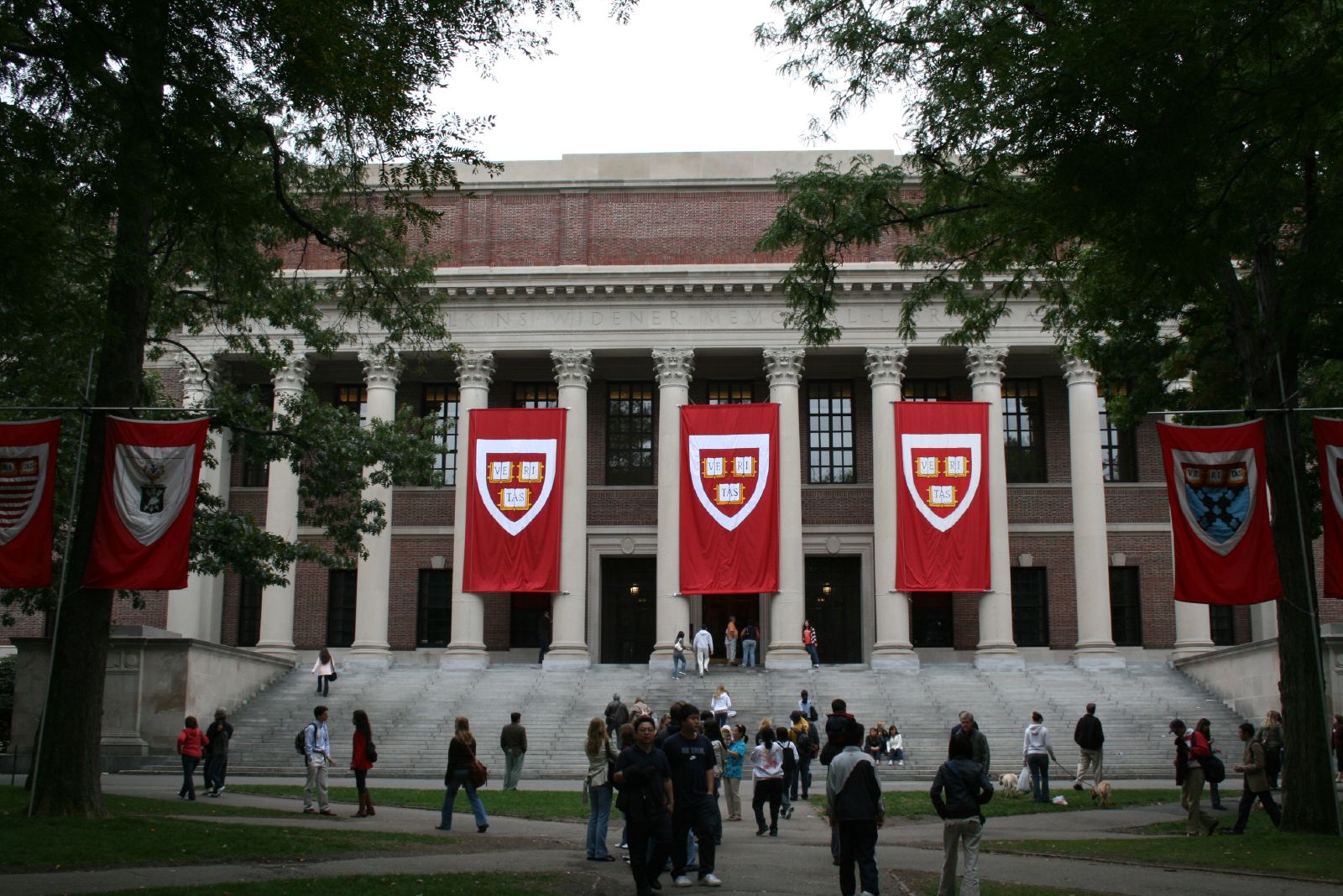
A Happy fourth of July from Harvard University! During my term at Harvard so far, I have had the opportunity to dine three times a day in the magnificent building pictured below. What appears to be a giant cathedral is actually home to Annenberg Hall, Harvard's main dining facility. What most universities would consider a most prized architectural feat has been transformed by Harvard from a "spare parts" civil war memorial building into one of the most heavily used buildings on campus. If they're using this outstanding facility as a cafeteria, just imagine what else this place holds in store!


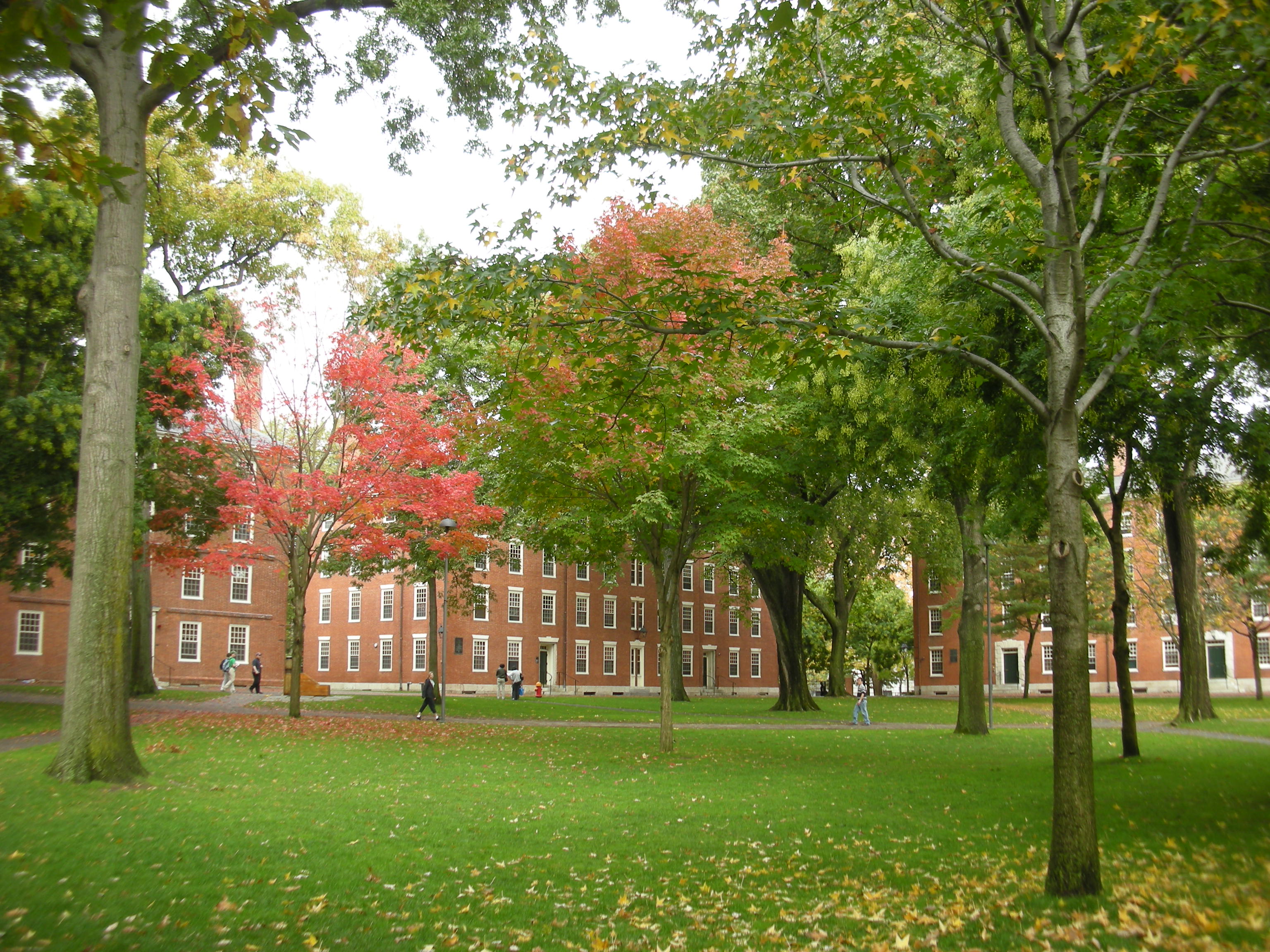
Let me first give you a snapshot of Harvard from my stay here so far. Harvard commands an indescribable sense of awe and prestige all around campus. Through the oversized buildings and perfect, New England style campus, pretense runs thick in the air. The volume of tourists running through Harvard Yard averages 8,000 per day, while the Yard itself holds only a few academic buildings and Harvard CollegeҀs 1650 first year students. Tour groups of up 50 persons pass through the yard every half hour, and even in the summer, when there are only 6,700 students enrolled in summer school out of the school yearҀs 20,000, Harvard is a crowded place.


Being enrolled in summer school there now has revealed to me how eager high school students across the world are to enroll in by far the wealthiest, most prestigious university in the world. Out of the 1,200 or so high school students enrolled in summer term through the Secondary School Program, over one in three was drawn to Harvard from a foreign country, and almost every fellow student IҀve talked to here has set Harvard as their first choice college (not me). I hate to disappoint them, but their chances of admission are astoundingly low overall, and even lower for international students, the group for whom admission seems most in demand. For the class of 2014, Harvard College received 30,489 for an entering class of 1667 freshmen, setting HarvardҀs admit rate at a record low of 6.9%.

So what exactly draws all this attention?


To begin with, Harvard claims a lot of impressive feats: it was the first institute of higher education in the United States; it has the most alumni U.S. presidents, supreme court justices, and senators of any university; and is additionally ranked number 1  by the following widely cited rankings: Academic Ranking of World Universities, U.S. News & World Report America's Best Colleges, and the Times Higher Education review. In terms of resources, Harvard has the largest endowment of any university in the world at $25.6 billion, and the largest university library collection in the United States with over 80 libraries containing over $15 million volumes.


Understandably, the undergraduate experience these 30,000 yearly applicants are seeking is one emphasizing the university's opportunities and resources, not to mention the immeasurable value of a Harvard stamp on one's degree after it's 400 year prestigious legacy. Despite the college's top notch academic resources, these survey findings published in the Harvard Crimson denote my general impression of the undergraduate experience at Harvard:
Prevalent stereotypes about how Harvard undergraduates have less fun than their peers found empirical confirmation Tuesday, when the Boston Globe reported that Harvard students gave lower ratings to their college experience than students at other elite schools in a 2002 survey. 
An internal Harvard memo analyzing data from the survey found that Harvard students rated their overall satisfaction at 3.95 on a five-point scale, compared to an average of 4.16 at the 30 other schools surveyed, the Globe reported on Tuesday. Harvard students gave lower ratings than peers to the level of interaction with faculty members and the quality of social life. 
This satisfaction rating placed Harvard fifth from the bottom in the survey of the 31 colleges comprising the Consortium on Financing Higher Education (COFHE). The COFHE includes all eight Ivy League schools, other top research universities like MIT and Stanford University, and leading small liberal arts colleges like Amherst College and Williams College.
 Ultimately, Harvard is not necessarily the most enjoyable place to spend one's undergraduate years, but I would argue that it offers the most opportunities, exposure to top faculty, graduate level coursework, and decidedly the most talented, luminary, and ambitious entering class of any undergraduate program in the world. Harvard's academic intensity and general academic program are, of course, a given. In fact, I won't even go into the specifics of student demographics and teaching style, as I have in nearly every other review, because Harvard is one of the few schools that I truly believe has everything one could want in an undergraduate education. For example, I recently acquired a book called "Find the Perfect College for You: 82 Exceptional Schools That Fit Your Personality and Learning Style," which matches students with colleges that match their Myers-Briggs personality type; in this book, Harvard is one of three schools compatible with each and every personality type (the others are Yale and Princeton). However, what really distinguishes Harvard from other top colleges is its true international focus. Close your eyes and imagine a place where the smartest and most ambitious young adults from all over the world literally come together into one confined area to learn and share and challenge each other. Now open your eyes - I'm speaking of Harvard.


This is very arguable, but my personal academic philosophy (and that of many top colleges) is the emphasis placed on the caliber of people around you in the college or university setting, in the sense that most students learn more during their undergraduate experience from their peers than from their coursework. This is why, for example, I take college rankings and entering class statistics as a serious indication of the quality of a college; diversity of opinion and intellectual prowess tend to come hand in hand with competitive admissions (holistically, not just based on test scores and GPA). With this in mind, Harvard is likely able to be the number one producer of Rhodes and Marshall Scholars and U.S. Presidents not because their is something magical in the water of Cambridge, MA, but because the sheer age and wealth of the institution has attracted the best and brightest minds from across the world, and that collaboration is what really produces extraordinary results.

Tuesday, June 22, 2010

University of Chicago Essay Questions released for 2010-11

As you can see from many previous postings on the school, the University of Chicago has always been one of my top choices, and I couldn't agree more with the school's ancient academic philosophy. Recent additions to social improvements and amenities on all levels of the university, from re-introducing a football team (they used to be a member of the Big Ten!) to implementing the house system of living for undergraduates, have made that age old, gold standard, academic intensity more accessible and enjoyable for enrolling students. If you've not looked into the school, I would highly recommend it for those who prioritize "the life of the mind" (as the college's saying goes).


Chicago has long been defined by its quirky, intellectual essay questions, mentioned in a few previous posts. If you want to get a head start on Chicago's application for the 2010-11 application, the just released essay questions are as follows:

Essay Option 1: Find x.
Inspired by Benjamin Nuzzo, an admitted student from Eton College, UK

Essay Option 2: Dog and Cat. Coffee and Tea. Great Gatsby and Catcher in the Rye. Everyone knows there are two types of people in the world. What are they?
Inspired by an alumna of the Class of 2006

Essay Option 3: Salt, governments, beliefs, and celebrity couples are a few examples of things that can be dissolved. YouҀve just been granted the power to dissolve anything: physical, metaphorical, abstract, concreteŀ you name it. What do you dissolve, and what solvent do you use?
Inspired by Greg Gabrellas, A.B. 2009

Essay Option 4: ӀHonesty is the best policy, but honesty wonҀt get your friend free birthday cake at the diner.Ԁ - Overheard in the city of Chicago.
Does society require constant honesty? Why is it (or why is it not) problematic to shift the truth in oneҀs favor, even if the lie is seemingly harmless to others? If we can be Ӏconveniently honest,Ԁ what other virtues might we take more lightly?
Inspired by Eleanor Easton, a second-year in the College

Wednesday, April 28, 2010

"Offbeat" Essay Topics

As a junior myself, I have begun to look into essay prompts for the class of 2015 application cycle at top schools. Here are some unique examples, mostly from very elite colleges, which have proven especially challenging for applicants and interesting for admissions officers.

Of note are the questions that are distinctively open ended, mostly from more intellectual places like Chicago or Tufts which thrive on their obscure, creative, engaging insights into what would otherwise be fairly flat topics.

Elite colleges require such unique essays for a number of reasons:

First, they want to weed out students sending generic essays to multiple schools (i.e. "I would love to attend _____ institution because _____" or "I have influenced my community because ____") and simply changing out the college names with the "replace" function on Microsoft Word. Students who aren't committed in the application process to writing 4, 5, or even 10 serious supplemental essays can thus be quickly weeded out by generic or underdeveloped responses to such interesting, fundamental questions.

In addition to demonstrating applicant commitment, these interesting essays provide the only insight into how applicants think and what new things people will pursue in college rather than simply assessing what they have done or who they are- things which are already demonstrated through the generic Common Application essays.


1. How do you feel about Wednesday? (University of Chicago, 2002)

This topic was inspired by a student. However, it was optional. Students did not have to share their thoughts on Wednesday if they did not feel comfortable doing so.

2. What outrages you? (Wake Forest, 2009)


For most students? Questions like this one. We think admissions officers are looking for a particular answer, like "genocide." Wake Forest claims they just want to know the real you, but they're just being obnoxious.

3. Write a haiku, limerick, or short poem that best represents you. (NYU, 2009)

Oh please, NYU
College essays are stressful
Don't make me do this.

4. In the year 2050, a movie is being made of your life. Please tell us the name of your movie and briefly summarize the story line. (NYU, 2009)


College admissions officers like to throw in "fun" questions like this to relieve a bit of the stress high school seniors face while applying to college. I don't think it's working.

5. What is college for? (Hampshire College, 2009)

Small liberal arts colleges like to pose deceptively simple questions like this one. I'd probably come up with something cheesy about forming close personal bonds and broadening myself intellectually.

6. Are we alone? (Tufts, 2009)

This question is one of several options for prospective Tufts students this year. I'm wondering how most people will interpret this one -- I immediately thought of extraterrestrial life. In any case, I'm betting most students will pick a more generic essay that involves less thinking.

7. Make a bold prediction about something in the year 2020 that no one else has made a bold prediction about. (University of Virginia, 1999)

UVa is another college that offers several interesting optional essays each year. Colleges claim they truly are optional and you won't be penalized for not doing them.

8. Write a short story using one of the following titles: a.) House of Cards, b.)The Poor Sport, c.) Drama at the Prom, d.) Election Night, 2044, e.) The Getaway. (Tufts, 2009)


This is an unusual essay, as it's asking for something fictional. But I'd imagine any prospective creative writing majors would be quite happy to pen a short story rather than a revealing nonfiction essay.

9. How did you get caught? (Or not caught, as the case may be.) (Chicago, 2009)

I had to include another UChicago one -- they're just so odd. This university likes to use offbeat questions because it draws in a different kind of student -- a bit eclectic and intellectual -- which is just what Chicago is looking for.

10. You have just completed your 300-page autobiography. Please submit Page 217. (UPenn, 2009)

This topic was popularized by UPenn in the '80s, and many other colleges have adopted it over the years. There's a (possibly apocryphal) anecdote about a father who called an admissions officer to ask if his son could send his essay in late, as he wouldn't have time to finish his 300-page autobiography before deadline.

The full article appeared on CNN's college admissions page on November 19, 2009.

Sunday, March 28, 2010

Early Decision results from The Choice

As you may know by now, I am a huge proponent of Early Decision programs as a way for students and institutions to connect over a common interest in bringing the most motivated, eager students to world renowned campuses across the nation.

Here are the admissions statistics from the 2009-2010 admissions season for Early Decision and Early Action programs. The accompanying article is very typical of those published yearly by guidebooks, noting exaggerated increases in applications.

I found these interesting simply because they vary so much from school to school. As opposed to the common story pitched by guidebooks that applications increase 20% at every school, every year, these statistics are pretty refreshing. Of course, at many schools, admissions chances are bleaker than last year (see the University of Chicago with a 56% increase in Early Action applications this year).

However, there is really only a substantial difference in about a quarter of competitive schools. Plenty of colleges like Williams got as much as 12% fewer applications this year, with most liberal arts colleges just about flat year over year.

In case you were wondering, there is still hope for most of us out there, and the admissions process is not cycling out of control - for this year at least. The problem with the process as a whole is that it is not forgiving year over year, and often times decisions come down to pure luck depending on where we are in the cycle at the particular time an applicant applies. Unfortunately for students seeking admission to places like the University of Chicago, this year was outright devastating.

Sunday, March 14, 2010

Insight into the Admissions office of UChicago

The following article is quite dated (from a 1999 Newsweek issue), but quite telling as for the kind of thinking that admissions officers are forced to utilize when forced to meet so many quotas. What may seem to be a negligible distinction between two applicants often makes the cut, and the article lists a few great examples that most people wouldn't have caught on to.

I mentioned quotas before, and I think the U of C approach to them is interesting.

"Their ethnicity, something that many applicants don't divulge, still isn't known in the aggregate. Chicago prides itself on using no gender, racial, geographic or other quotas in deciding whom to accept. "We're not 'building a class,' creating this ideal little world with so many of these and so many of those," O'Neill says. "We accept the best, and hope to get as many as we can."

This is a constant struggle for me when I am looking into campus demographics; trying to objectively interpret a campus culture from mere statistics or snippets of student input. What I have found true for most schools is certainly not consistent with Chicago's statement above; most top colleges are indeed statistically (racially) diverse, but are still overly homogeneous in opinion and politics.

This statement is surely taken into account by people viewing "diversity" statistics, but I don't think most people account for how true this problem really is on college campuses. The product of this thinking is generally an unbalanced and overly liberal student body which, though open to new ideas, is intrinsically closed to much of America's real political sentiment, inadvertently hampering campus "diversity".

The article is linked here: University of Chicago Admissions - Newsweek

Wednesday, March 3, 2010

The Best Sources for College Information

I wanted to provide some insight into how I process the wealth of information about each particular college to make it manageable, accurate, and most importantly, relevant to my application process.

1. Website - When I first hear about a college by word of mouth or maybe a glace through a ranking or viewbook, my first step is to stop at the college's website. This seems like the logical step, but college websites are often unbelievably convoluted and generally uninformative. Liberal arts colleges especially end up advertising the benefits of a liberal arts education, rather than an education from a particular college. The website visit thus allows for a general gist of what the school has to offer you academically and socially. One thing to take note of is what the colleges choose to occupy the space on their websites. Pay attention to what the college is really advertising - this is what the school prioritizes, even though they will all claim a "holistic undergraduate experience". Such categories to take note of are school spirit, academic rigor, and most popularly a great residential environment (most ivy league schools).

2. View Book - I must first confess, I am a complete sucker for flattery mail sent out by colleges. As soon as I have established a serious interest in a college, I fill out the form on their website to request information. This serves two purposes. First, the content of view books is some of the best information you will get about a school, from student perspectives to admissions preferences, this is the colleges time and place to brag about what makes them unique. Look at a view book the same way as you view a website. Interact with it, read the entire thing, and note what the college chooses to emphasize to see if those things are fitting with your priorities in a college. Second, you will also be added to that school's list of applicants who have "demonstrated interest". This is seen as a way of expressing interest (and thus likelihood to enroll if admitted) a little under the influence of a campus visit, but still seen as a positive initiation of communication between applicant and college.

3. Look the school up in a comprehensive guide - I have used a variety of guide books, but I keep coming back to the same few books because they have truly outstanding and experienced perspectives on schools that parents and students couldn't possibly have gleaned from a view book or even a campus visit or information session. The guide to start with is undoubtedly "Fiske's Guide to the Colleges", a very comprehensive and easy to read guide book that really emphasizes the intangibles of a school, what you might call a school's personality. This is a great opportunity to cross reference what the guidebook says from professional experience with what you thought about the school from exposure to their marketing - perhaps you were sucked in by those autumn campus still shots in the view book. A College Prowler is also a must to capture the overall experience of a college. Skipping the insignificant sections like safety, security, on and off campus housing, computers, etc. and focusing on the meaty sections like academics, local atmosphere, and guys and girls, they take a maximum of twenty minutes to read - an efficient use of time.

4. After you have been interested for a school for a few weeks or months, it's time to get serious about comparing your top choices. Check out the college's yearly course handbook from your guidance office and compare the types of classes offered for the program of interest to you. The types of courses offered speak boldly about what a college values. As a prospective anthropology major myself, I see a lot of schools offering only traditional courses such as Social Anthropology, Urban Anthropology, Social Theory of the Individual, which reflects upon that school valuing a more traditional liberal arts education. More progressive schools might offer courses like The Anthropology of Star Wars, Consumerism in Society, or even The Anthropology of Tattoos. Such specialization is key in selecting both an academic program and a comprehensive atmosphere that is fitting with your interests. To further your understanding of a school's academic reputation and offerings, begin to look at the specific department that houses your prospective majors (always more than one program - you will probably change your mind between the time you apply and enroll)and decide what they emphasize through major requirements. The guide book "Choosing the Right College" published biannually by the ISI organization, though terribly elitist and demanding of schools (upholding that a school is essentially worthless if it doesn't require a core curriculum), offers a lot of insight into how the school is doing financially, what resources it has to offer, what departments emphasize, how responsive the administration is, and the general campus atmosphere encompassing the political views and student awareness on campus.

Always remember - it is a process and your opinion of a school at a given time is completely relative to which source you have seen last or what mood you are in. I keep a journal of my interest in schools so that I can compare how I feel currently with how I felt a few months ago. This method has kept me from "obsessing" over certain schools for short periods of time, and has allowed me to find the schools that I consistently recognize as top choices to help establish what I really value in a college for the long term.

Friday, December 4, 2009

Breakthrough Webcast in College Admissions

Jordan Goldman, founder of leading college site Unigo.com recently coordinated a panel of leaders on the college side of admissions to give students an inside peek on the college admissions process.

The Webcast features admissions officers and deans of admissions from some very prestigious colleges, including Bryn Mawr College, Grinnell College, Marquette University, Princeton University, University of Pennsylvania, University of Vermont, Wesleyan University, and Williams College.

I found the Webcast extremely helpful and many of the answers extremely telling of the way in which applications are viewed. Pointers on how to complete applications parts like extra curricular lists and Standardized testing were very informative. Much of the information and general comfort with the process used to be limited to lengthy books about the process; this is a great opportunity to get ahead and to build your understanding. At least part of the ninety minute Webcast should be worthwhile.

The video is linked below:
WSJ On Campus | Unigo

Sunday, November 15, 2009

Jon's Favorite College Sites

Favorite College Sites

Now that I'm starting to look at colleges and help out friends with their college choices, I have come upon a few sites that are really worth checking out.

Unigo.com

The highlights of this site are that has a ton of content and that all of the content is completely student contributed. The entire premise of the site fascinates me. A few years ago, a Wesleyan University grad got the idea to make a site out of all student generated content to provide a middle ground for prospective high school students and college students to learn and share their perspectives on their college experiences.

Reviews with the pink "recommended" tab are quite thorough and are genuinely helpful in grasping the essence of a college, beyond the level of a guidebook. It really takes guidebook-level raw information and translates it into what it actually means in terms of social and academic atmosphere. Another quick feature is the best and worst aspects of each college, which are short, one sentence responses written by students that tend to be pretty helpful grasping the big-picture of a school.

Unigo also provides a good glimpse of the average student through video clips from around campus and student responses and perspectives. Users should take all content with a grain of salt though, since it is pretty subjective in that students can say whatever they want. It definitely provides a one of a kind view into college life and how students feel about their final college choices.


StateUniversity.com

StateUniversity.com has also been a fantastic resource. Although this sounds like a tacky site for local schools, I assure you that it offers a comprehensive view on colleges of all levels of competitiveness. They also offer their own ranking system based on things like professor salary and test scores - things that tend to suggest career success and student satisfaction. The site also contains information such as demographics and entering class statistics in a way that's easy to understand and allows for easy comparison of schools.

I think that's what I appreciate most about everything on this site: it makes everything easy to compare and to digest. Objective information such as rankings or special honors a college has earned appears in a straightforward way alongside subjective information about general academic programs and the intellectual focus of the college community. Overall, it gives the best overview of a college of any online resource, and is only matched among books by Fiske's Guide to colleges, which I also strongly recommend.


About.com : College Admissions
http://collegeapps.about.com/

Rather than providing profiles of individual colleges (which this site also does for a smaller number of schools), this site is really a road map for common questions that families have about college admissions. Examples of topics include things like "What is Early Decision?" or "ACT or SAT?" The site is extremely helpful with how to begin the application process and with help regarding standardized testing. I also like that the site provides a lot of information about what test scores mean, and where you can go with them. The host of the site also manages a very interesting editorial blog in addition to providing FAQ and basics of admission. Topics go into different things like "Taking a year off," or "How colleges are reacting to the recession." This level of information is very helpful for getting into the minds of college admissions staff and for the advanced intermediate who is interested in learning a little bit more about the admissions process as a whole.