
To give you a general outline of my life at UChicago, IҀm a first-year living in Dodd-Mead House in Burton-Judson Courts. IҀm currently taking required Humanities and Social Science Core sequences, as well as Latin and humanities electives. Outside of the classroom, IҀm in several reading groups and academic clubs, a writer for The Chicago Maroon and College website, and an after-school philosophy coach for neighborhood students through the Civic Knowledge Project.
After visiting campus many times my senior year for various campus events, my residential experience here officially began in late September with Orientation Week, known here as ӀO-week.Ԁ First-year students move into their houses one week before classes begin and have a chance to get to know their fellow classmates and the University more broadly. ItҀs an unusually social time for students here, many of whom donҀt typically come out of their shells or have Ӏfamily timeԀ with their housemates. With O-week began my praise of the (Harry-Potter-style) House system, which provides a great group of friends with which to attend campus events, explore Chicago, and generally relax with outside of class.

Student life at UChicago is constantly buzzing with various activities, both on and off campus. These are the perfect compliment to academic life. In just this past week, IҀve attended two career events; four club meetings; three public lectures on topics ranging from economics to religion; attended a school-sponsored Lascivious Ball (IҀll let the name speak for itself); and taken advantage of Chicago by exploring Chinatown with my house and seeing the Chicago Symphony Orchestra, Lyric Opera of Chicago, and Art Institute of Chicago. I also have to plug queer life here, which is very well established on campus and, like everything at UChicago, has a definite intellectual slant that refreshingly defies many queer stereotypes. Generally, student life here has a lot to offer if one is proactive and takes advantage of it. ItҀs often tough to balance everything, but I love penciling exciting new events into my calendar each week.
Though extra-curricular life has certainly been eye-opening, the deeper transformation occurred in my classes this past quarter, which were unlike any I had taken before. The Humanities and Social Science Core have truly changed the way I think and write after just one quarter. Both of these sequences examine great books without the ӀslantԀ with which traditional classes approach a work. As a quote engraved in Harper Memorial Library summarizes the College's Great Books approach: ӀRead not to believe or contradict, but to weigh and consider.Ԁ

The closest thing to the Core I have taken before are two Freshman Seminars at Harvard, which it turns out have little in common with my current classes. Freshman Seminars at Harvard (and most other colleges, from my understanding) approached a specific topic with a faculty expert and focused almost exclusively on the course material. Core classes are nearly the opposite; the texts we read are springboards into more universal topics. Discussions regularly descend into fundamental philosophical debates to the likes of Plato and Aristotle in RaphaelҀs The School of Athens.
In accordance with the Socratic method, Core class discussions arenҀt guided to a specific destination, but that doesnҀt make them flimsy. Comments are expected to be relevant, insightful, and almost always to reference a specific passage in the text. This classroom method of claims, evidence, warrants, and counter-claims is meant to work hand-in-hand with the expectations for academic writing at Chicago, which are emphasized from the very beginning in an additional peer writing seminar which students must pass as part of their Humanities Core. The seminars themselves get mixed reviews from students, but the general theme is central to the CollegeҀs academic mission: critical inquiry and precise means of argument are the backbone to any liberal arts education. Professor Wendy Doniger described that philosophy most aptly in an anecdote she read for Convocation one year:
Once when I returned to Hyde Park after a long trip abroad, I dashed off to the Co- op, of blessed memory, to restock the larder. As I waited to check out, I overheard the conversation of two undergraduates standing in line in front of me. ӀNo,Ԁ said one to the other, Ӏbut thatҀs not what Aristotle meant by that.Ԁ ӀAh,Ԁ I thought with a happy sigh, ӀIҀm home.Ԁ It was not merely the subject of their debate׀Aristotle, the poster boy of the Common Core׀that identified them as my people, but the style in which they were debating, the contentiousness of their discourse. That intellectual style is one of the things for which the University of Chicago is justly famous, our cultivation of the hawk eye that pounces on the unexamined assumption, the false logical link, the shoddy piece of evidence. And we are right to be proud of that training.
׀Wendy Doniger, Mircea Eliade Distinguished Service Professor of the History of Religions at the University of Chicago Divinity School, June 2008 Convocation Speech entitled ӀThinking More Critically About Thinking Too CriticallyԀ
In writing this post, I re-read my review of UChicago from my first visit in 2009. My understanding of the University has changed greatly since then, to say the least. For one, I was then a believer in the self-deprecating slogan, ӀThe University of Chicago: Where fun comes to die.Ԁ I saw Chicago then as extremely niche and a college experience defined by the sacrifice of social life and non-academic activities. (Never mind that my house currently sells mugs bearing a picture of Cobb gate with the inscription "Abandon all hope... Ye who enter here," playing on the O-week photo above.) Though these characterizations arenҀt "wrong," theyҀre fundamentally misguided in that they attempt to squeeze Chicago into a narrow box. On the contrary, ChicagoҀs best attribute is its resistance to such oversimplifications via its emphasis on free speech and its diverse modes of inquiry. A perfect example of this is the "Aims of Education" speech delivered to my Class of 2015 during O-week. The speech was from a statistician who presented real-world data in the form of charts and graphs with little interpretation, thus deliberately leaving it up to us to determine how it related to education in our small discussion groups following the talk.

A summer job application recently asked me to share Ӏwhat I considered my greatest achievement and why.Ԁ I thought really seriously about this question for days. In the end, I felt that listing an accomplishment or award from high school would really just be resting on my laurels, which is something I try to avoid on principle. It occurred to me then that my greatest accomplishment in life thus far is that I ultimately chose the University of Chicago for my college experience. I have never been more proud of a decision in my life. Having visited over twenty top colleges, many of which provide a significantly "happier" college experience, I've had my share of reservations and doubts. (To the like of Barry Schwartz's The Paradox of Choice, be warned that the more colleges you visit, the more objects you will have for comparison. You thus run the risk of being less satisfied with the one you finally choose!) Yet, my doubts have fully dissipated, and, as it turned out, I knew what I wanted from the very beginning, when I first visited UChicago in summer 2009.
I chose the most challenging institution I came across from the over two-dozen that I visited. The one thatրfrom day oneրfanned my sense of curiosity, made me question and defend my ideas, and promised no Ӏeasy way out.Ԁ The University of Chicago's mottoրCrescat scientia; vita excolatur, or Let knowledge grow from more to more; and so be human life enrichedրmeans more to me than ever before. Being a part of what has been called "The Great American University" has taken my life, not just my education, that much closer to where I want it to be. As my professors and peers here have shown me in equal part, that symbiotic journey of intellectual and personal discovery, however grueling, is one worth embarking on.


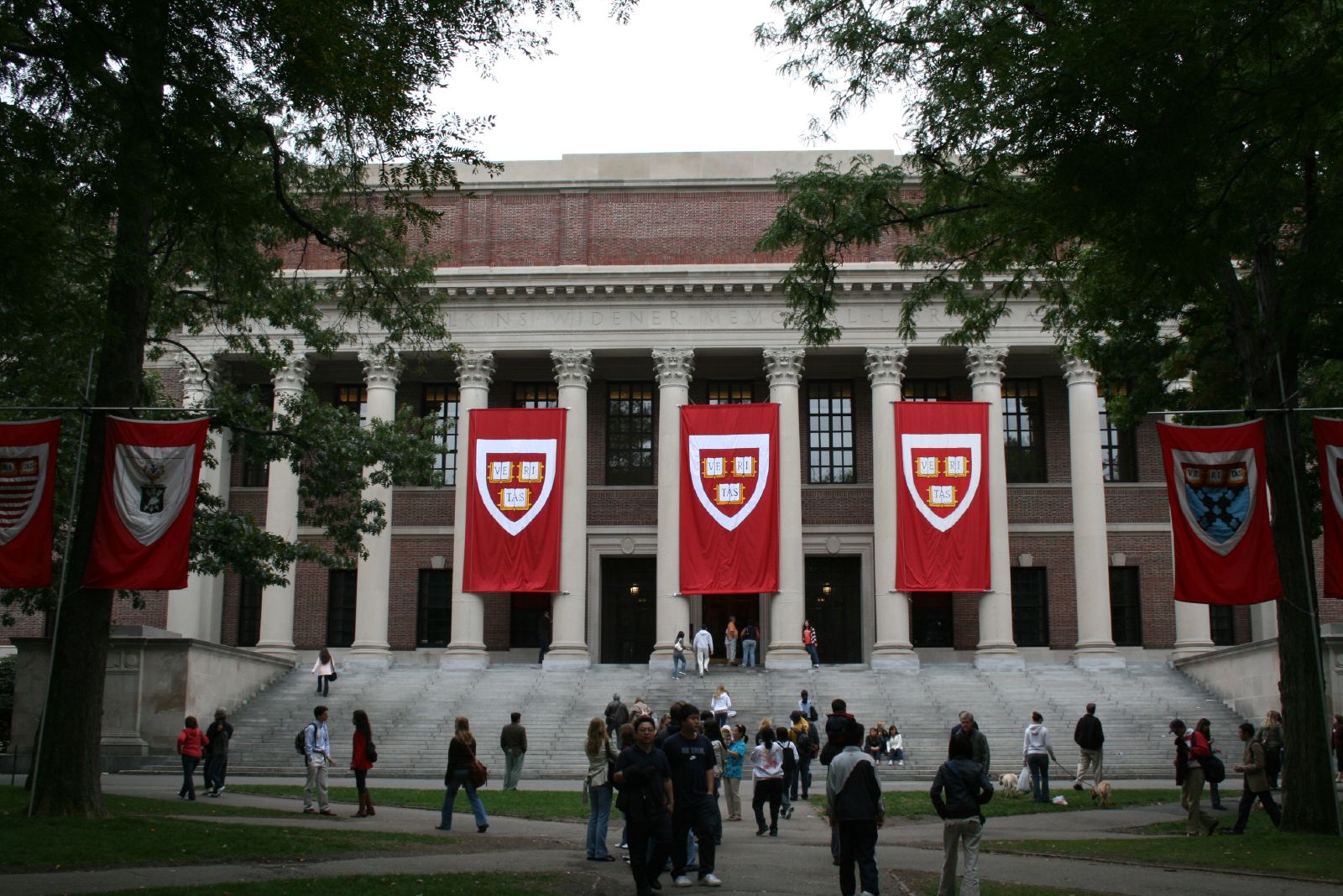
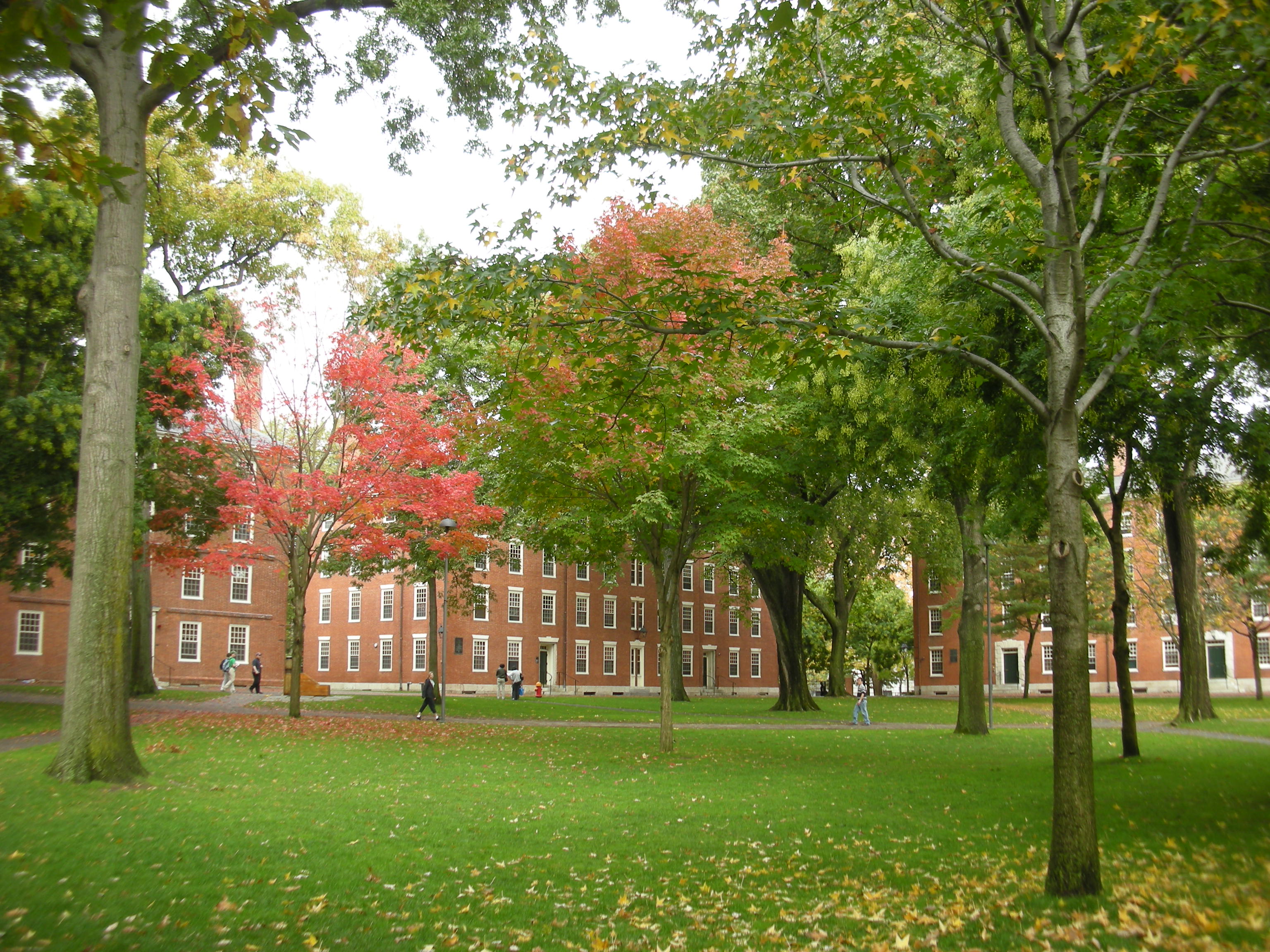

 ," which matches students with colleges that match their Myers-Briggs personality type; in this book, Harvard is one of three schools compatible with each and every personality type (the others are Yale and Princeton). However, what really distinguishes Harvard from other top colleges is its true international focus. Close your eyes and imagine a place where the smartest and most ambitious young adults from all over the world literally come together into one confined area to learn and share and challenge each other. Now open your eyes - I'm speaking of Harvard.