Thursday, April 4, 2013

Spain: Semana Santa in Seville


            Seville: a city that will always have a special place in my heart. I was fortunate to be able to see the capital of Andalusia during Semana Santa (Holy Week) when the whole city was out on the streets celebrating. Thinking about it now, there was one point during my stay when I questioned if I had made the right decision by visiting SpainҀs fourth largest city on the busiest week of the year. But that was only because I got stuck for two hours circling my hostel through narrow, windy streets, many of which were blocked by people eagerly watching the various processions that were passing by.
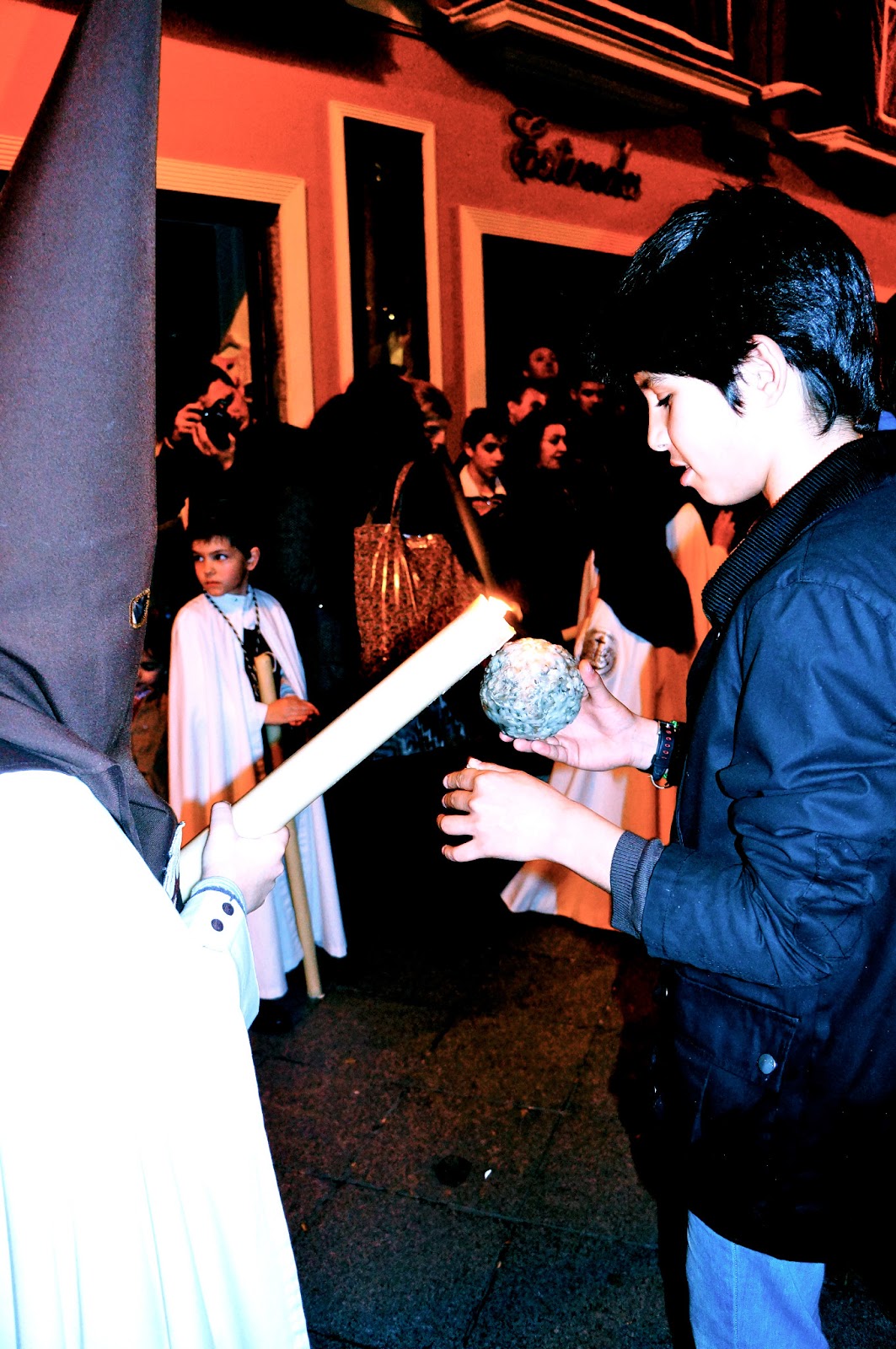
I arrived in the city on Thrifty Thursday. That night I witnessed my first procession. I wandered through the congested streets until I found an unoccupied spot up against a grey stone wall. Around me were families of three to four generations that were waiting for the processions of Los Negritos (The BlackҀs) brotherhood to pass en route to SevilleҀs Cathedral from their local church. Elders, adults and teens were all participating in botell n, essentially drinking in the street, which is allowed only on holidays. Children were having their own fun running around and playing with balls they made out of wax that they had collected from the candles of previous processions. The boy next to me proudly told me that he had been collecting the drippings for his wax-ball for years; I could tell by its large volume (it was about the size of his baby brotherҀs head).
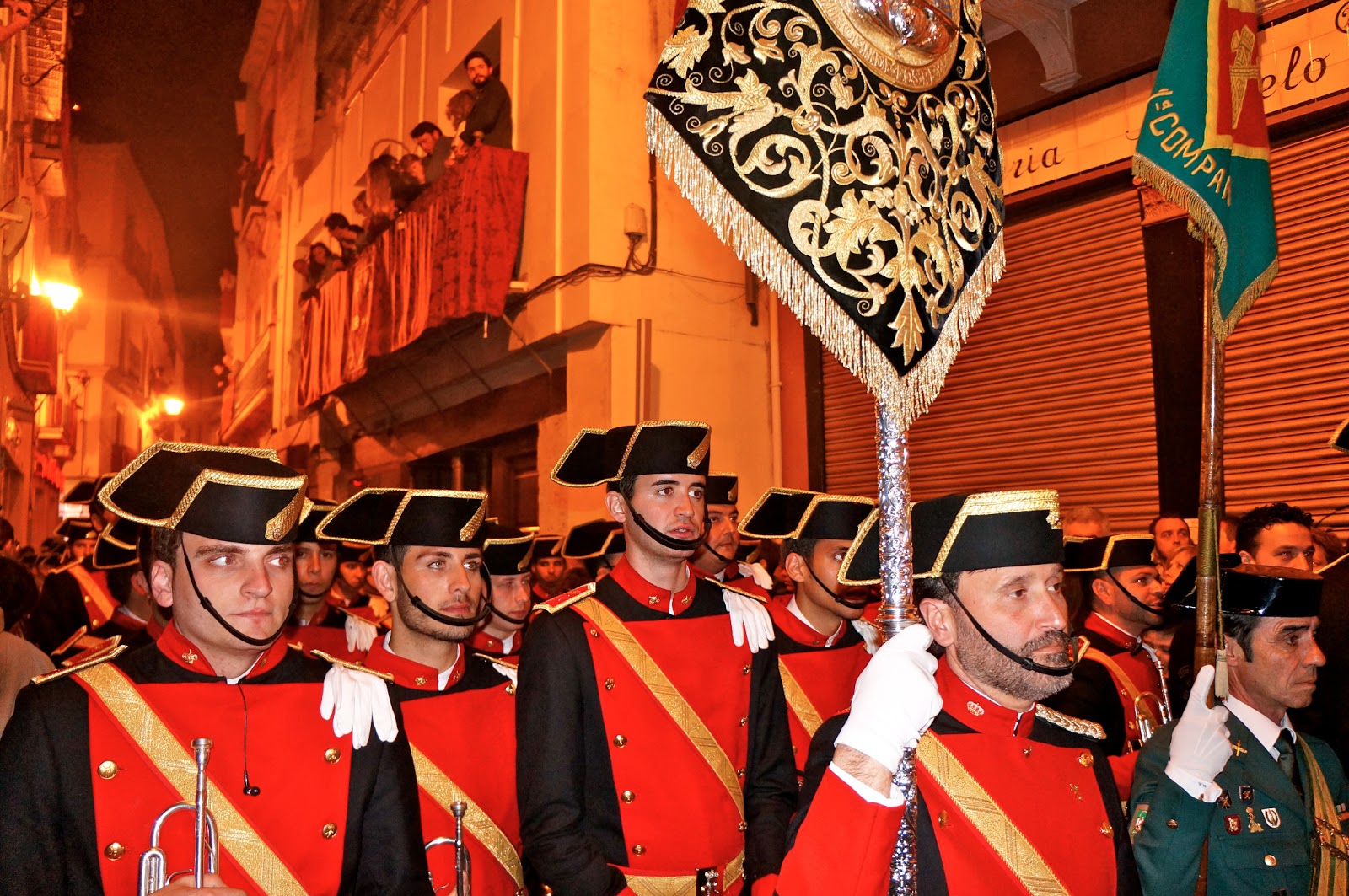
I instantly knew when the procession had turned the corner nearest to me because the many loud Spanish voices quickly turned into loud hushes. La Cruz de Gu퀀a (guiding cross) lead the procession through its fixed path. Following the cross were the nazarenos, members of the brotherhood marching in silence, without shoes, wearing solid colored capirotes (pointed hoods), holding long, lit, wax candles. Alter boys dressed in vestments and dalmatics, traditional Christian garments, preceded next with chandeliers and incense that perfumed the street.  For me, the scent of the incense immediately brought back childhood memories of Catholic mass.  
The National Police walked in front of El Paso, a float with intricate, lifelike wooden sculptures that depicted a scene of the Passion and the Virgin Mary mourning her sonҀs crucifixion. The floats were decorated with fabric, candles, and flowers and were lifted, moved, and lowered on the shoulders and necks of a team of strong men called costaleros. The men are all inside the structure of the float, disguised by a curtain, creating the illusion that the float is moving by itself.
As the first paso was about to reach me, I realized the need for the police. The paso took up almost the entire width of the thin street. Men in their uniforms herded people like sheep down the street to make enough room for the float to get through with ease. Luckily, the part of the street that I was standing on left no room for anyone to get behind or in front of me. As the paso slowly passed I pushed against the wall and sucked in my belly. There was barely an inch of space between the oversized representation of Christ and myself.
I was raised Catholic but I donҀt consider myself to be a religious person nor do I believe that touching something will bring me good fortune (the way that many Catholics feel about the floats). But, when the gold plated pasowas inches in front of my face and I could see the antiques beauty, my inner child wanted to touch it and believe, if for just a moment, that it was a tangible representation of something much larger than myself. So I did. 

Here are some pictures I took of the procession:


They were trying to get a better view of the procession
 Outside the Cathedral


-Ana Caicedo


Wednesday, April 3, 2013

Kevin Ware

For those of you who haven't heard, this past Sunday Louisville's guard Kevin Ware suffered a horrific injury.  Kevin was running to defend a play when it happened.  As Ware leaped in the air to pressure the Duke shooter he landed awkwardly on his right leg.  Ware's landing caused his bone to break through the skin.

As text messages and tweets began to circulate, It was horrible to hear what had just happened to the 20 year old college ball player.  At first Kevin did not know his leg had suffered such a horrible incident.  Kevin was quoted saying in an interview that he thought his ankle was just hurt.  When his coach came over to check on Ware, they both realized the severity of the injury.

The actual video is quite gruesome so I chose not to post it in this post. If you want to see it you can click the link below.  I warn you, this video isn't suitable for everyone.


The interview below is of Kevin Ware discussing the severity of his injury and how important it was for his team to win that game.  Doctor's say that Kevin's Injury might have been a stressed fracture that was just ignored.  For those of you who play college sports make sure to take care of your bodies.  Winning a game is important but your well being is what matters the most.

I just want to wish a speedy recovery to this brave young man.


Tuesday, April 2, 2013

Study in USA 뀀 Universities in United States 뀀 Nebraska

뀀 Metropolitan Community College
It is located in Omaha, Nebraska. It has over 12,000 students enrolled, of which 1% are foreigners from over 60 countries. It has 608 academic departments in the following areas: Accounting, Architecture, Business Administration, Arts, Business, Finance, Computer, Technology, Civil Engineering, Criminology, Management and Sales.
Հ More information:
Phone: +1-402

Chile: Falling Off The Continent


After some sleepless nights, several bus and plane rides and a lot of dry camping food I'm back from an unforgettable 8-day adventure in Patagonia alive and wellŀ albeit with some creaky, sore ankles. 

Map of the region
Punta Arenas is the last town on the Chilean side


Patagonia Region de Magallanes y Antartica Chilena is the name of the southernmost and second-least populated place in Chile. It's world-renown for its spectacular national parks and expansive wilderness. The place is virtually untouched and is something of a geological and geographical wonder. This far south, you encounter everything from volcanoes to steppe-like plains and edenic small islands. And of course, the scraggy snowy remainder of the Southern Andes compose the backbone of the area. The weather and the terrain get odd and dodgy on this last little sliver of earth. Adventure beckoned and we all set off to spend Santa Semana hiking the Torres del Paine park.

Welcomed by the cozy small-town charm of Punta Arenas, my friends and I arrived in Patagonian territory last Friday afternoon. Arenas is as far south as you can go on continental South America. Several small islands exist below it, but it's as close as you can get to Antarctica without leaving the mainland. Just gazing out over the water and realizing I was in fact looking over the same strait that Magellan himself discovered and subsequently bequeathed his name was an awe-inspiring experience in itself. The entire week was peppered with these little moments and, however small, they made all the foot pain, back aches and cold nights more than worth it.

Catholic church in downtown Punta Arenas
Center of Punta Arenas
Local vendors sold everything from alpaca sweaters to jewelry and coffee mugs out of these little wagons
Magellan Statue
Legend says that kissing the Native's foot will guarantee a return to the town one day!
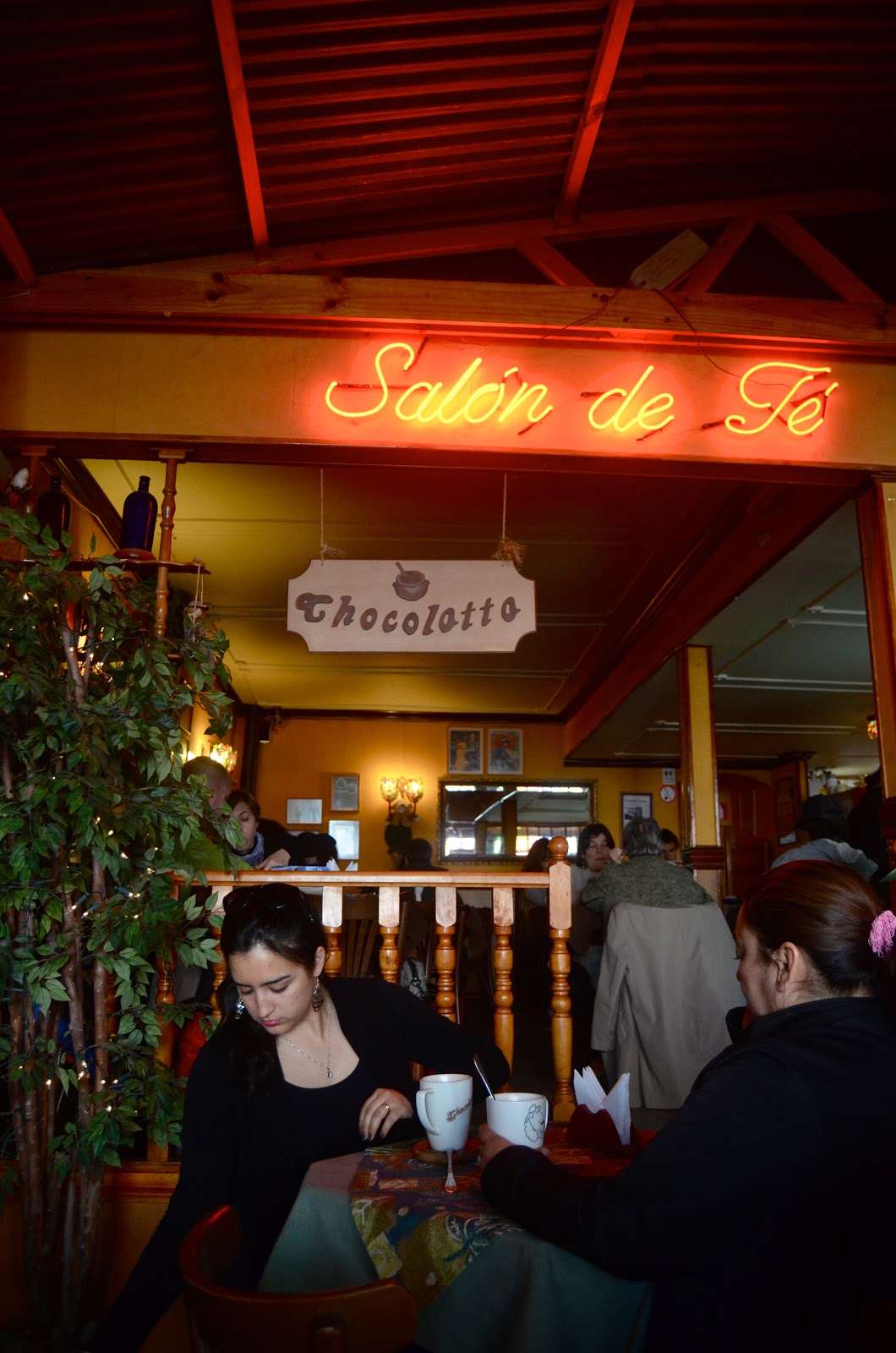
Punta Arenas was filled with quaint little cafes. Chocolatta quickly became a group favorite.
....I'm sure you can see why.

View of the Strait of Magellan
Meticulously trimmed hedges lined the paths of the town's famous cemetery  
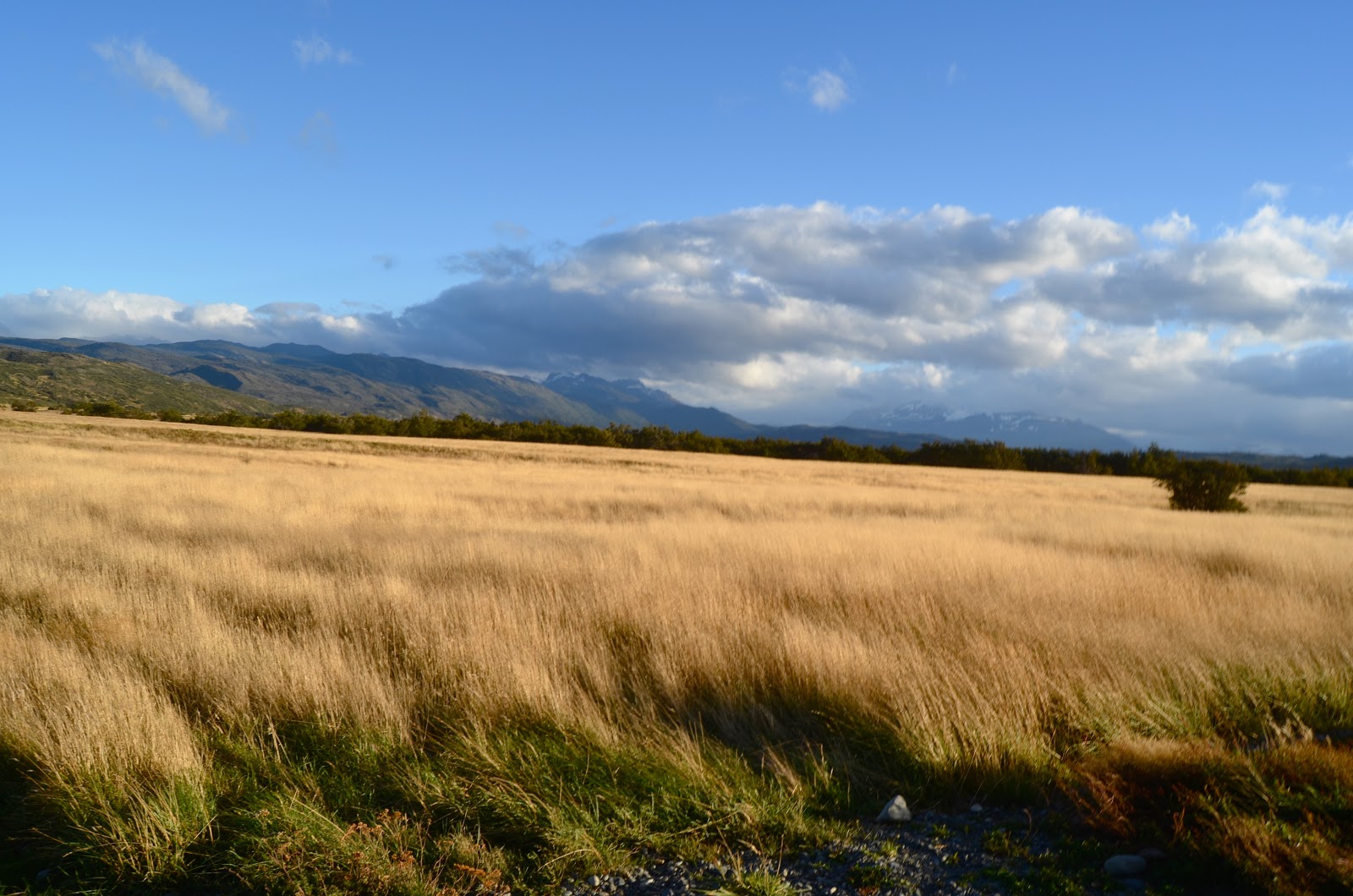
From Punta Arenas we were off to Puerto Natales and then the Torres Del Paine National Park. In this part of the world you truly get the sense that you're at the very fringes of the earth. The scenery driving into Natales and the park included everything from wind-swept, endless rolling heathland to towering dark mountains and cliffs that seemed to rise out of nowhere in particular. More than anything, the scenery was devoid of towns, houses, stores or humans. Save for a few grazing sheep, the place seemed empty and untouched. I imagined it was what the world looked like beforeŀanything. 


"It's an orange sign. You can't miss it." 
After a quick briefing from the park rangers they basically turned us out onto the field and let us go. The first campsite was about a two hour hike away and night was falling so we wasted no time in hitting the trail and getting started. Unfortunately, the supposedly unmissable orange trail marker was non-existent which meant a lot of walking in the absolute wrong direction from where we were supposed to be going and aimlessly wandering around a field until someone spotted the orange pole "trail marker" hidden in the middle of the grass.  Yeah, Patagonia!


First afternoon on the trail 

Rio Paine by the first campsite
We ended up having a breezy, starry first night. After trekking for three hours, it was more than rewarding to look out over the grassy, moonlit valley toward the river and hear nothing but the wind cascading down the mountain sides and the trickling of the creek. 
In the morning we headed off toward Lake Pehoe and onto another campsite called Camp Italiano. Although it's lengthy  (about seven hours of hiking), this trek is commonly thought of the most beautiful in the park. We walked through seemingly infinite amber valleys toward regal blue mountains in the distance, charred forests filled with the eerily beautiful black-and-white skeletons of burnt trees, and struggled up (and down) rocky, twisting trails that hugged perfect blue rivers and lakes. 


Lake Pehoe


And then it rained. Tuesday morning found us exhausted, sleep-deprived, wringing out our clothes and rearranging our trekking routes. A few of us decided to back track to another camp ground and see the park by making day hikes while the others decided to soldier on and finish the circuit. We took a quick trip up to the French Valley then headed back to the refugio campsite. From there we hiked to Glacier Grey, which ended up being the favorite site of the trip. 

The French Valley


Trail to the refugio campground


On the trail to Glacier Grey 
View from the top: Glacier Grey


Sadly, my feet started to fail me sometime between seeing Glacier Grey and hiking back to the campground. I actually had a walking stick and I probably looked completely ridiculous. One morning I managed to gain my footing outside of the tent only to be blown over by a gust of wind. Walking a few yards took about ten minutes and I was hobbling everywhere. It was pretty pathetic. 
But between cursing Patagonia one minute and loving it the next, we all managed to make it through the remainder of the week in one piece and ran into some interesting characters along the way. Over many an oatmeal breakfast, we'd chat with travelers from everywhere: people from the States, Thailand, France, South Africa and England, just to name a few. Some were retirees, some were students and others were just drifters traveling the whole of South America or even the entire world. Everyone had a good story to tell or a piece of advice to hand out. While there, we almost forgot we were in Chile.

And before we knew it we were back where we started and on the bus back to Puerto Natales. 

Lake Pehoe from the ferry
Bridge on the Torres trail

Vaqueros rounding up the horses


On our last trail out we saw llamas everywhere... with the beautiful Torres in the background
While we headed back toward civilization I realized that I had never before seen so many beautiful things before in my life. Glaciers, immense snow-capped mountains and untouched wilderness are all things we see in documentaries and textbooks, but viewing them in real life is an entirely different experience. All only a stone's throw away from the ultimate wilderness, Antarctica, no less. 


Being in the presence of these things, getting lost on (or not on...) the trail, and tossing in a rain soaked tent all night kind of puts you in your place as a human being and brings you back to life. Sometimes your socks are going to get wet and the tarp is going to blow off the tent and it's not always roses...but just look at the view! As I rested on the cushy bus seat  I found myself already missing the humbling yet invigorating adventure that is Patagonia. 

There's truly something about not being able to move your feet but carrying on anyway for no other reason than to see something breathtakingly beautiful. Even in a place as remote as Patagonia - where at any given time you could be miles away from the nearest person - what's a more human experience than that? 


ŀ.


Monday, April 1, 2013

Is studying abroad too expensive? Or is studying abroad cheaper than studying in the US?


What if you found out that studying abroad is actually cheaper than studying in the US?

Have you ever considered studying abroad, but felt like it was too expensive? 

YouҀve come to the right place.

Cheapstudyabroad.com was created just for that reason.

Hello, my name is Cindy, and I am the founder of Cheapstudyabroad.com. I recently had the opportunity and privilege of studying abroad in Phuket, Thailand. It was one of the most beautiful places IҀve ever seen!After returning home from Thailand, I decided that I would love nothing more than to help more students like myself, experience a whole new world.
I was one of the many students who look at brochure after brochure, and still decide that studying abroad is too expensive. However, I found the perfect destination for me and I was able to fly, study, and live in Thailand for four months all under 5,000 USD.

Studying abroad IS an amazing experienceŀand it IS affordable.

IҀve partnered together with a company by the name of Asia Exchange that is located in Finland. They have been sending students from all over the world to study abroad in Asia since 2007. After having been a part of one of their programs ( I studied abroad with Asia Exchange in Spring of 2012 in Phuket, Thailand), I knew that creating this partnership would be beneficial to so many more American students.
When I spoke to my study abroad coordinator she referred me to so many programs that were just a little out of my budget. Students look at those prices and think thatҀs all there is. However, we are one of the many independent programs out there that are much more affordable.
All in all, my hopes are to further spread the word about how wonderful Asia ExchangeҀs programs truly are, how amazing my experience was while studying abroad in Asia, and to increase the knowledge for those students who believe studying abroad will never be possibleŀespecially because of their finances.
Please visit Cheapstudyabroad.com to find out how YOU too, can afford to study abroad. 


Online Ministry Degrees: If Faith is Thy Fate!


Ministry DegreesGone are the days when only the most introverts used to heed the call of their faith and commit themselves to the service of God and church. Now joining the church has become so popular that more and more schools are offering degree programs in religious studies online as well. Degrees of associate, masters and even doctorate in ministerial studies are now available online, as well as numerous certificate courses. Almost all of these programs are designed to provide students the fundamentals of Biblical knowledge and equip them with the necessary organizational and leadership skills for leading their flock towards true religious redemption.
In todayҀs melting pot of multiple religions, there duties of a ministerial position have changed drastically and an online ministry degree will help and guide you towards holding on to your true Christian identity while still merging in with the rest of the multi-cultural and multi-religious world.

Read more 뀀